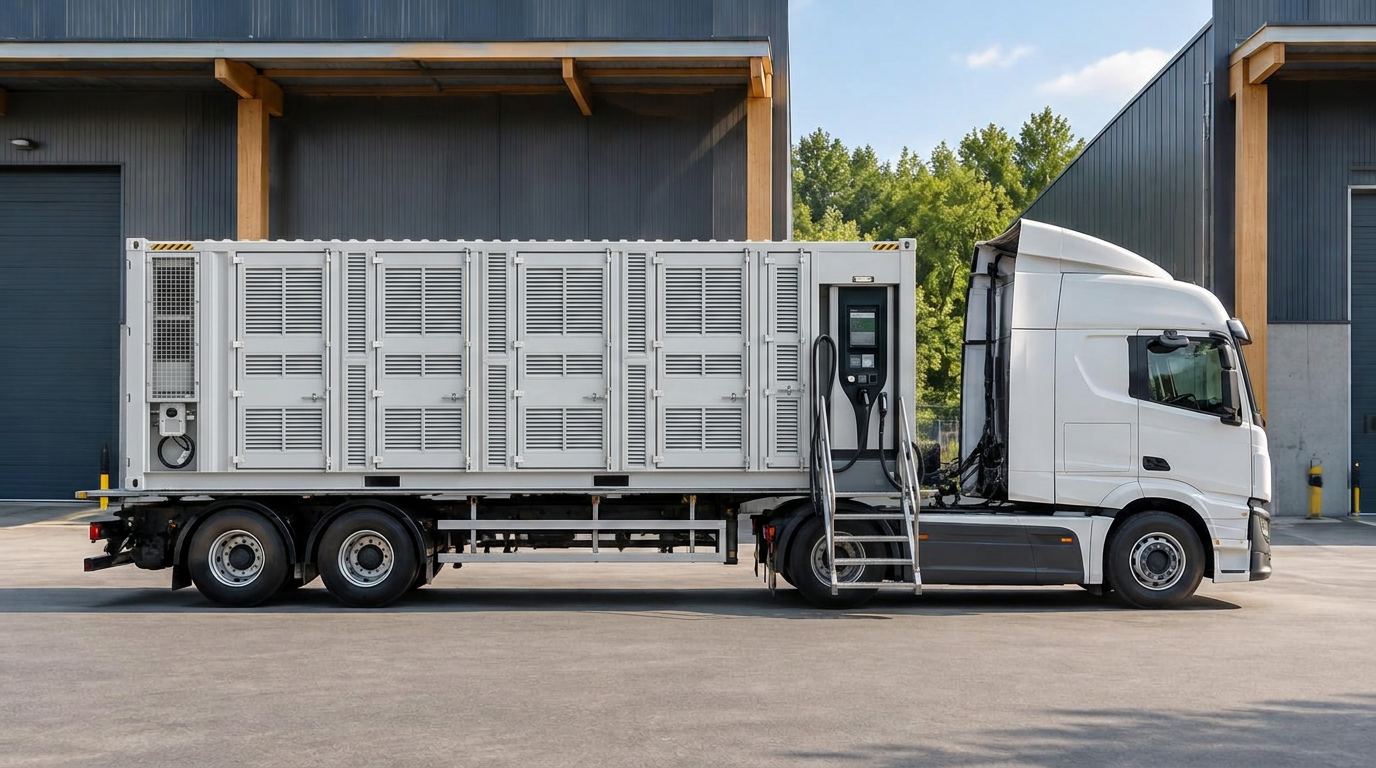
Mobile Power Plant
The unit is set up, not built.
A container arrives on a semi-trailer, is standing within a day, and delivers charging capacity that the grid connection alone cannot provide.
Arrival
A container, delivered on the semi-trailer.
No foundation, no building application for the site, no crane. The unit stands where it is needed and moves on once the grid connection is in place.
The principle
Same night, same connection.
On the left, the yard charges what the connection provides. On the right, storage is added — the same night, the same connection capacity, eight times as many vehicles.
Applications
Three tasks the unit is built for.
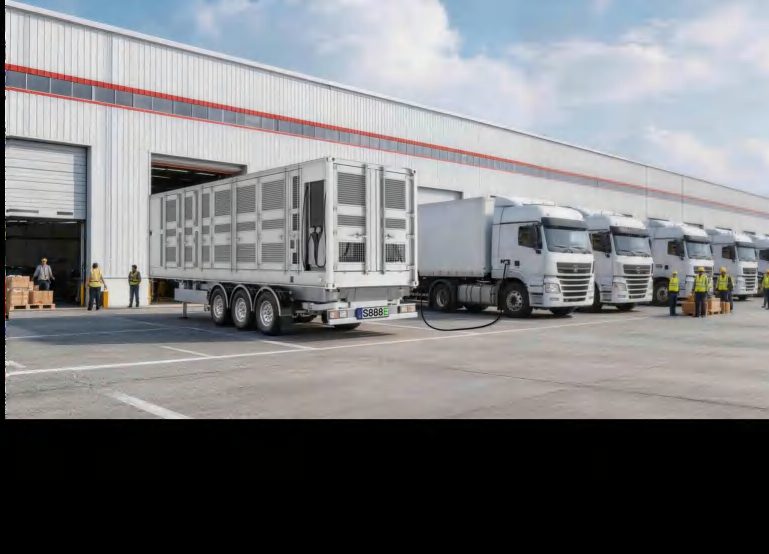
Charging without grid expansion
The fleet charges overnight, even though the connection cannot provide it.
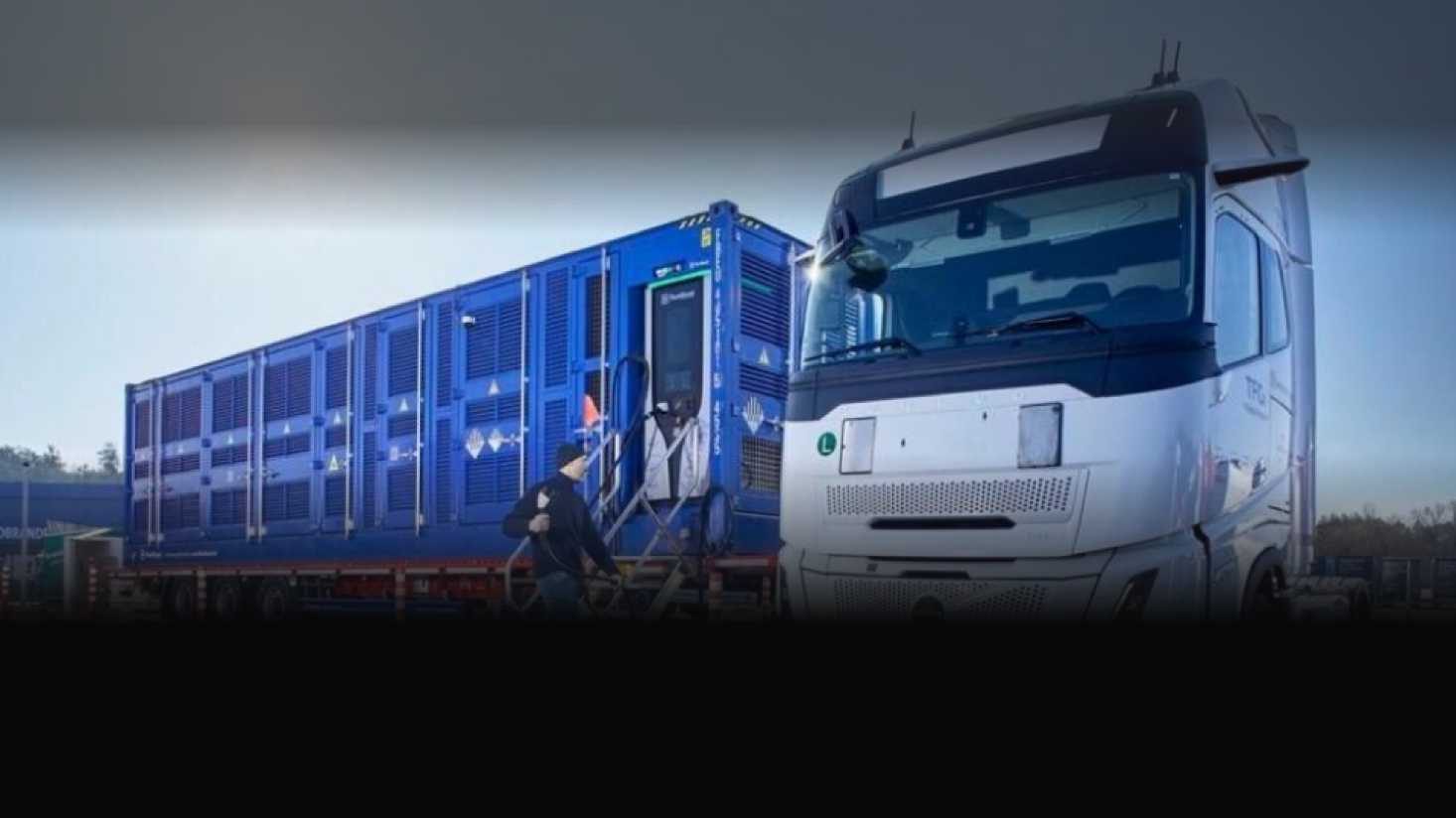
Until the connection arrives
The grid operator's commitment takes time. Operations do not wait.
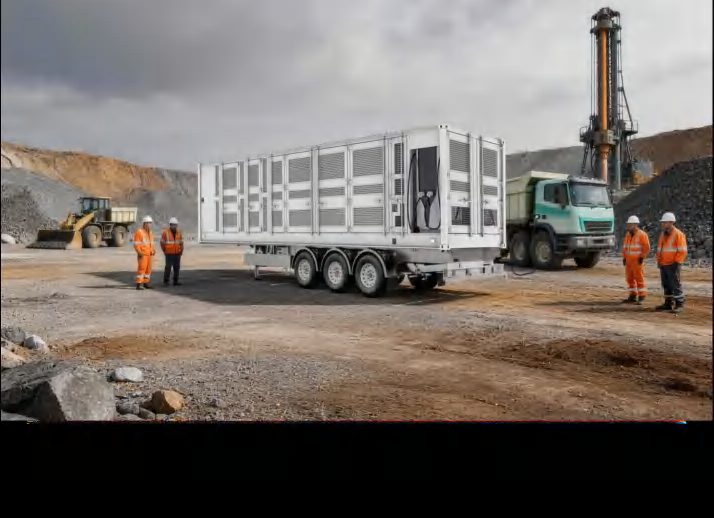
Power without diesel
Equipment and vehicles charge where there is no grid.
Two generations
The unit you get today is the second one.
The first generation worked with battery cabinets: 20 ft with 400 kW and 1.069 MWh, 40 ft with 800 kW and 2.135 MWh. The first unit in Europe has been in operation this way since September 2025.
The second generation works with battery packs. It fits into a single 20-foot container what used to require two — and it comes in three configurations, because power and capacity are sized independently.
High power and high energy — for yards that charge many vehicles in a few hours.
Same energy, half the power — for long dwell times through the whole night.
The middle path, when both load profile and footprint are constrained.
Power and capacity are configurable independently; the sizing follows your load profile, not a fixed size.
Datasheet
The sizing follows your load profile, not a fixed size.
| Output power | 1,000 kW | 400 VAC ± 15%, 50/60 Hz |
| Capacity | 2,036 kWh | Charge and discharge rate 0.5 P |
| Cycles | 10,000 | at 25 °C / 0.5 P, up to 12,000 |
| Remaining capacity | 82% | after 10 years, 365 cycles per year |
| Dimensions | 6,058 mm | × 2,438 × 2,591 mm, 20 ft |
Does it catch fire? CATL sets the safety target at nuclear power plant level: a fire probability below 10⁻⁵ per unit per year. Behind this is a pack design that prevents propagation — a single cell can fail without the pack following, with directed gas venting below the explosion limit.
Will it last ten years? The lifetime forecast is based on a third-generation model with a twenty-year calculation, verified by a third party. It is the basis for the 82% remaining capacity after ten years.
Will the warranty provider still be around then? A ten-year warranty is only as good as the company behind it. The provisions are on the balance sheet, and there is a dedicated plant in Thuringia.
Why wait for the grid connection, when the bridging solution is standing there in three months?
The site first. Then the numbers.
Whether a mobile unit is the right solution at your site depends on laydown area, connection and duration. We clarify that on site.